Multiscale Computational Fluid Dynamics Laboratory (mCFD Lab)
The research program at the Multiscale Computational Fluid Dynamics (mCFD) Laboratory integrates fundamental computational modeling with proof-of-concept experimental investigations to address complex multiphase flow systems across multiple scales. The work is inherently interdisciplinary, with a strong emphasis on developing and applying advanced CFD models to problems involving complex fluids, interfaces, and transport phenomena.
A central objective of the laboratory is to establish quantitative links between microscale interfacial dynamics and macroscale performance. This multiscale perspective enables a deeper understanding of governing mechanisms and supports the rational design and intensification of chemical and process systems. The research approach combines rigorous numerical modeling with experimental insights to ensure both physical fidelity and practical relevance.
The group aims to develop a balanced framework for multiscale modeling that incorporates both scale-up and scale-down considerations. Leveraging collaborative expertise and domain knowledge, the research activities are directed toward building comprehensive computational–experimental strategies for a wide range of applications in multiphase and complex flow systems. Members of the mCFD Laboratory are encouraged to pursue interdisciplinary research, with active engagement in problems of both fundamental significance and industrial relevance.
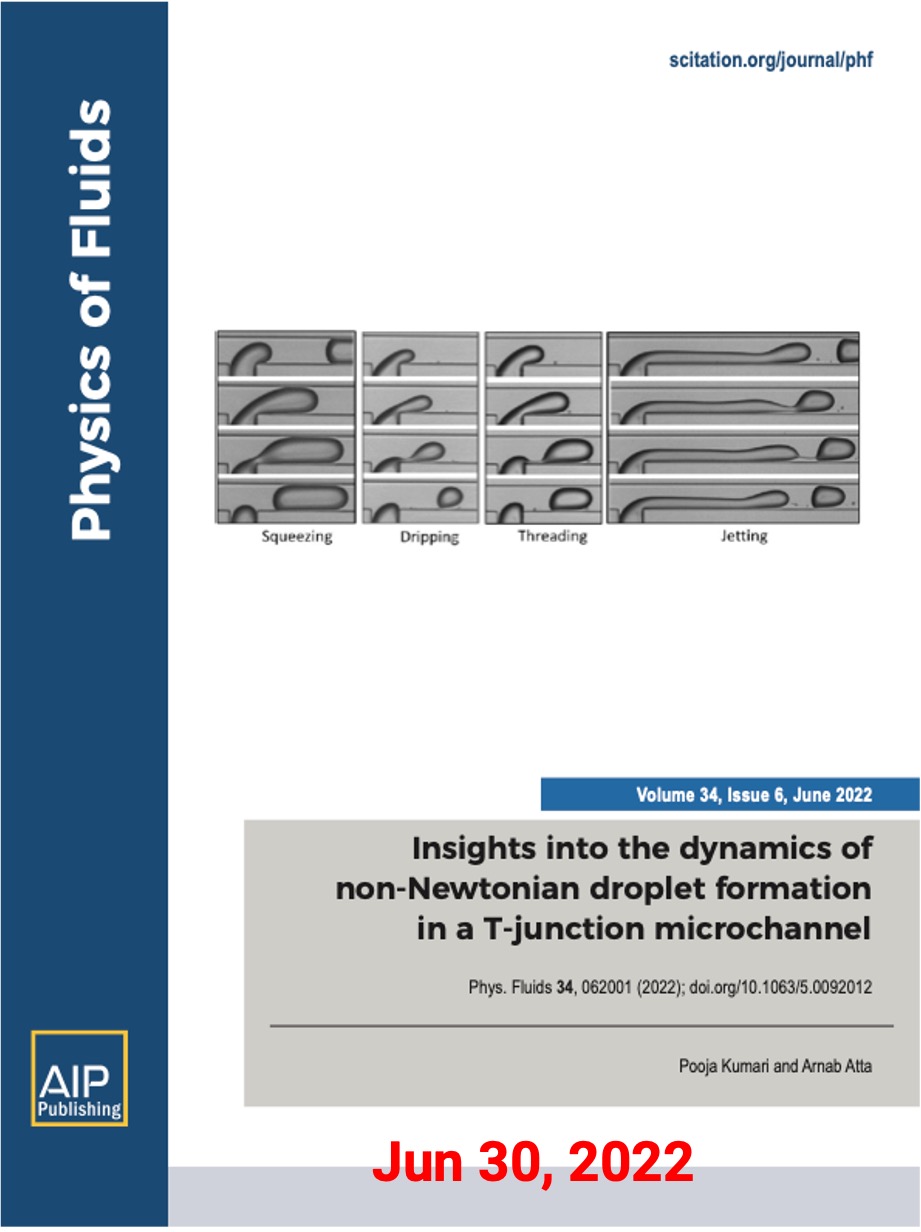
Microfluidics, droplet dynamics, emulsions
Controlled multiphase flows in confined geometries, focusing on droplet formation, breakup, and transport behaviour.
Reactors, packed beds, fluidized systems
Hydrodynamics and transport in industrial multiphase reactors with emphasis on scale-up and process design.
Interfaces, thin films, electrohydrodynamics
Interfacial instabilities and nanoscale transport phenomena governing thin-film and coupled multiphysics systems.